Envisioning Our Future and How We Get There
Every transportation plan starts with the same goal: To help people reach the places and opportunities that allow them to thrive. Planners create networks that make getting around the region easier, whether it is hopping on a bus or train, riding a bike, or walking along safe paths. These networks help people access the destinations that make their trips meaningful, including shops, parks, theaters, arenas, and recreational spaces. All these efforts are only valuable if people know how to use them. Far too often, knowledge of transportation choices is the barrier that keeps community members from making those connections and experiencing everything a region has to offer.
TDM: A Key to Proactive Transportation Planning
The Association for Commuter Transportation defines TDM as “The use of strategies to inform and encourage travelers to maximize the efficiency of our transportation systems leading to improved mobility, reduced congestion, and lower vehicle emissions.”
Even the most well-intentioned transportation plan can end up on a shelf if it fails to bridge the gap between planning and implementation, specifically connecting people to the services it envisions. This disconnect can be avoided by proactively integrating TDM into the planning process from the outset. By considering TDM early on, planners can think beyond the technical aspect and better grasp the specific needs and behaviors of the community. From the initial goal-setting phase to plan development, TDM principles can influence and shape a plan’s objectives. Given that transportation plans establish a framework for addressing a region’s transportation needs and involve major investments, it’s critical to maximize resourcefulness throughout the planning process.
This can be achieved by evaluating low-cost TDM strategies to identify potential solutions and address gaps in capital projects, service design, and other areas. Engaging TDM experts can help to identify opportunities, incorporate TDM measures, and provide education to address potential adoption barriers. Ultimately, including TDM in the planning process facilitates a seamless transition from project completion to implementation, ensuring that connecting people to places sustainably remains the central goal.
Influencing Travel Choices
While planning is key, the implementation phase is essential to reach its intended outcomes and regional goals. TDM continues to play an important role during the implementation phase, which goes beyond marketing transportation options. When informing communities about transportation changes or enhancement in their community, discussing their options to get around is only a start. What helps to connect with the impacted community is education, training, and incentives, to help increase awareness and drive real behavior change. By leveraging existing resources, coordinating with local partners, and understanding the trips people need to make TDM program services and initiatives can be tailored to help people access their desired destinations. Here are ways TDM strategies can be applied to connect with travelers and commuters:
- TDM programs help people find options to make trips. Providing personal travel information and multimodal trip planning (sometimes called a personalized trip plan), motorists can find alternatives to sitting in construction traffic. Through partnerships with roadway owners, this information can be shared using highway variable messaging boards and added as a resource to the 511 system, an easy-to-remember three-digit telephone number, available nationwide, that provides current information about travel conditions.
- Many people decide where to live based on how easily they can reach the places they need to go. Employers also consider accessibility when choosing where to locate. The National Association of Realtors conducts research on housing affordability and walkability to support their agents when working with buyers. TDM programs can partner with local realtors, redevelopment specialists, and community organizations to explain the transportation options available and how new residents, employees, and customers can use them without everyone driving alone.
- Helping more people share a ride reduces demand for long-term parking and frees spaces for short-term users. This decreases the amount of time drivers spend circling for a spot. By implementing TDM strategies, some employers have avoided the cost of building more parking and increased revenue by using existing spaces more efficiently throughout the day.
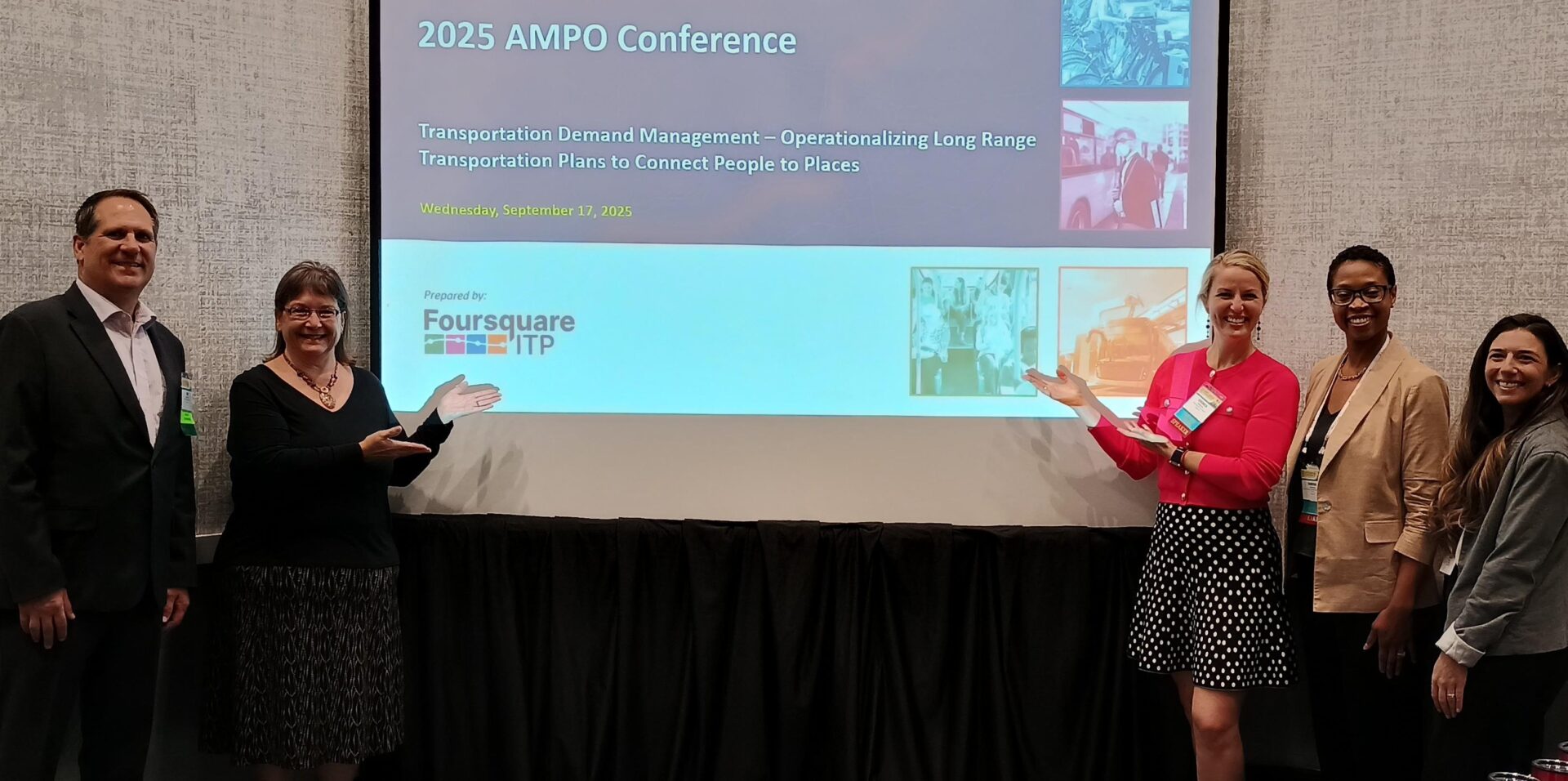
If you have other ideas on how TDM can support the implementation of regional plans, or want to share other unique challenges you have, please connect with me at lkschweyer@foursquareitp.com.