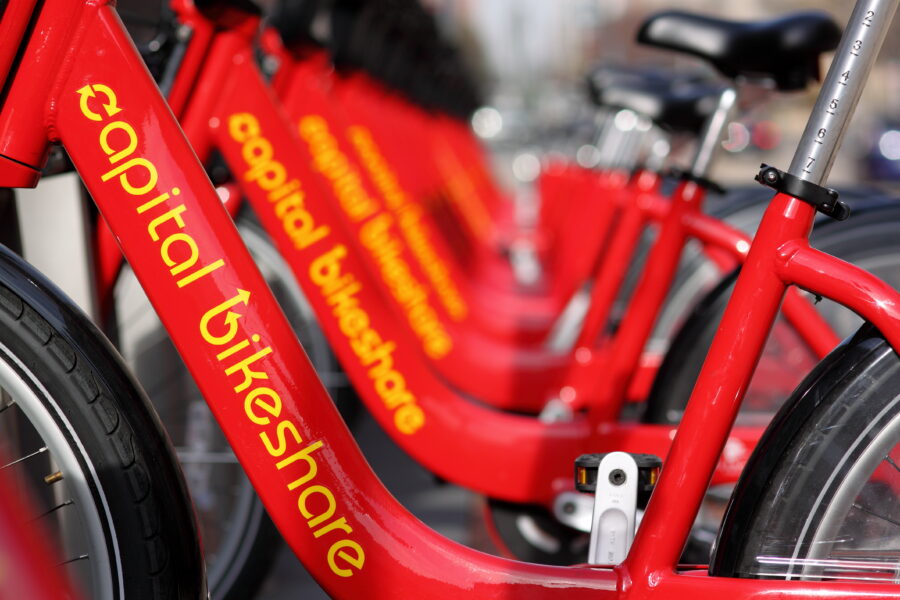
Foursquare ITP undertook a study to explore a new fee schedule for Capital Bikeshare in the District of Columbia to ensure the system could remain financially sustainable. The implementation of e-bikes coupled with system expansion and rising inflation had added new financial pressure on Capital Bikeshare system operations.
Using examples from literature and peer bikeshare systems, we developed a fare model for Capital Bikeshare that examined the potential impacts of fare changes across the system, such as increasing the e-bike usage fee and amending the Capital Bikeshare For All program. These models incorporated elasticity of demand for bikeshare to gauge how fare changes would impact both Capital Bikeshare members and casual users.
The new fare schedule optimized fares to ensure Capital Bikeshare will continue to be financially sustainable in the long term by targeting changes to major cost drivers for the system. This includes increases fees for casual users and implementing a credit-based system for Capital Bikeshare for All members. After implementation, the new fare structure is projected to decrease District Department of Transportation’s (DDOT) operating deficit by over 50 percent while keeping ridership constant.
Solutions and Outcomes
- Built a fare model that incorporates elasticity of demand into fare revenue and ridership estimates.
- Developed recommendations for a new fare schedule for Capital Bikeshare.