Foursquare ITP led the complete redesign of the Maryland Transit Administration (MTA) bus network in Baltimore, Maryland, creating the system now known as BaltimoreLink. Since the system launched in 2017, we have continued to support the MTA as a trusted transit planning partner, helping streamline daily operations and guide long‑range improvements across the region.
Our ongoing work with MTA’s Office of Service Development (OSD) includes a wide range of efforts to enhance service reliability, operational efficiency, and customer experience.
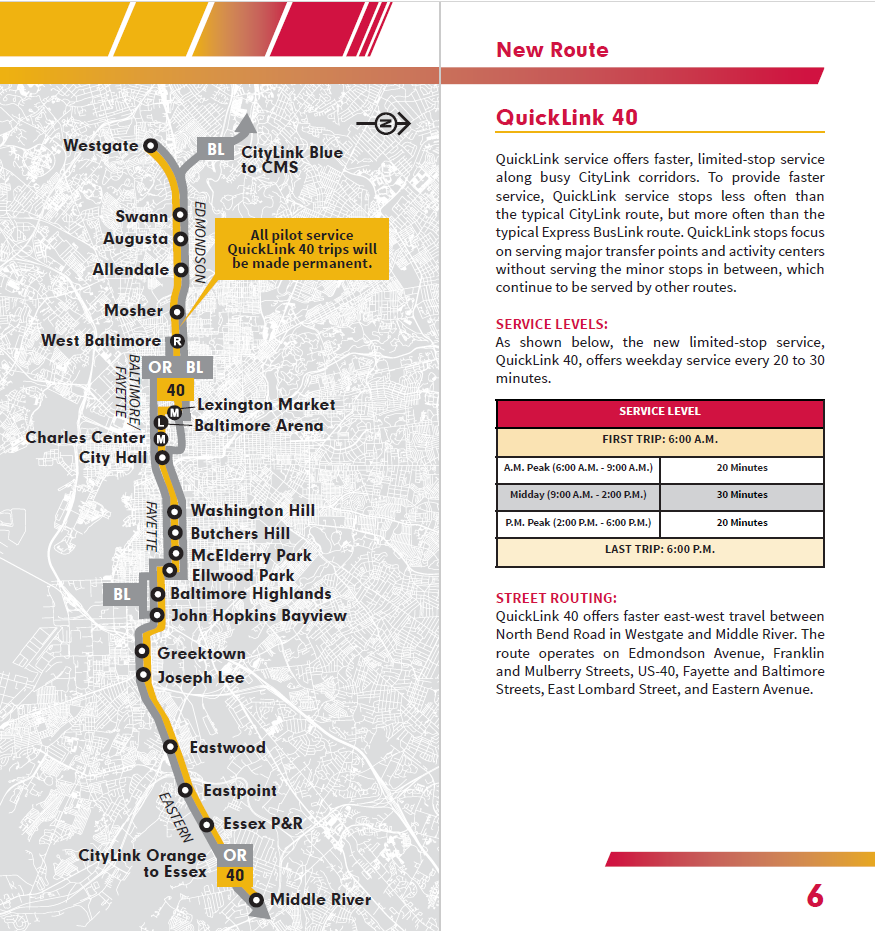
Premium bus service study. We analyzed the entire BaltimoreLink core bus network to design a limited‑stop “premium” bus service, developing service guidelines, evaluating five potential route options, and selecting a pilot route for implementation..
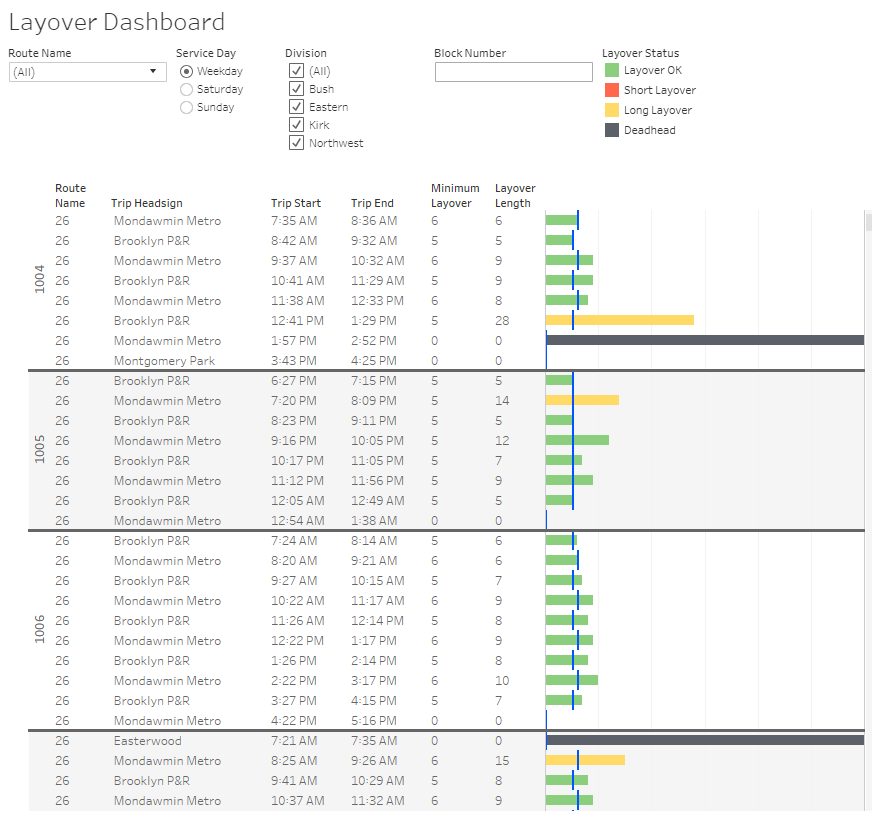
Performance monitoring program development. To improve data‑driven decision‑making, Foursquare ITP created a comprehensive performance monitoring program that integrates APC, AVL, AFC, and customer service data. Results are visualized through interactive Tableau dashboards, giving MTA immediate access to route‑, service type‑, and system‑level performance trends.
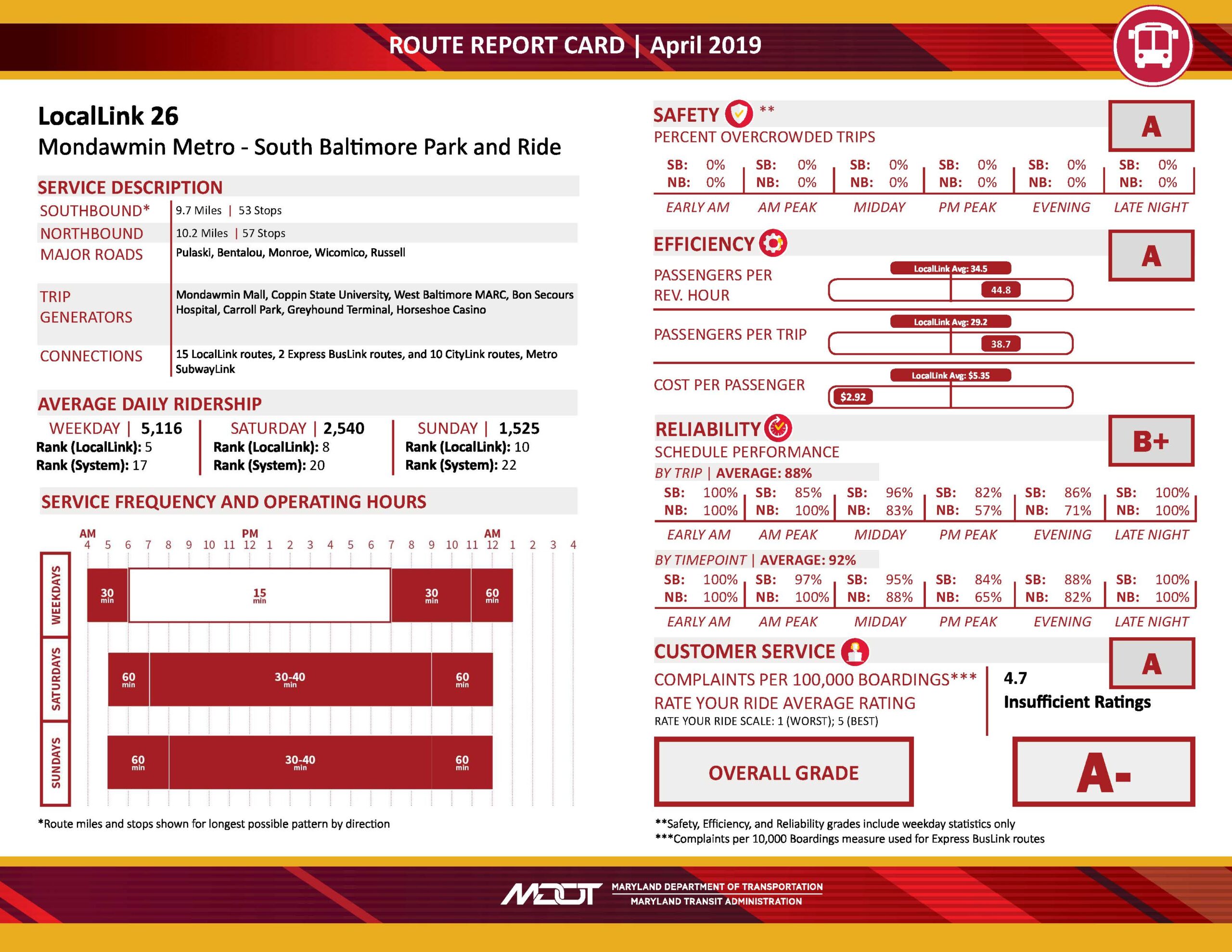
Route grading and report cards. We developed a route report card and grading system that allows MTA to evaluate performance at multiple levels and track trends across union picks. Paired with the dashboard system, this tool supports transparent, data‑backed service planning.
Service planning guidelines. Foursquare ITP created a complete set of service planning guidelines covering network design, route numbering, operating characteristics, service analysis, and implementation processes—establishing consistent standards across the agency.
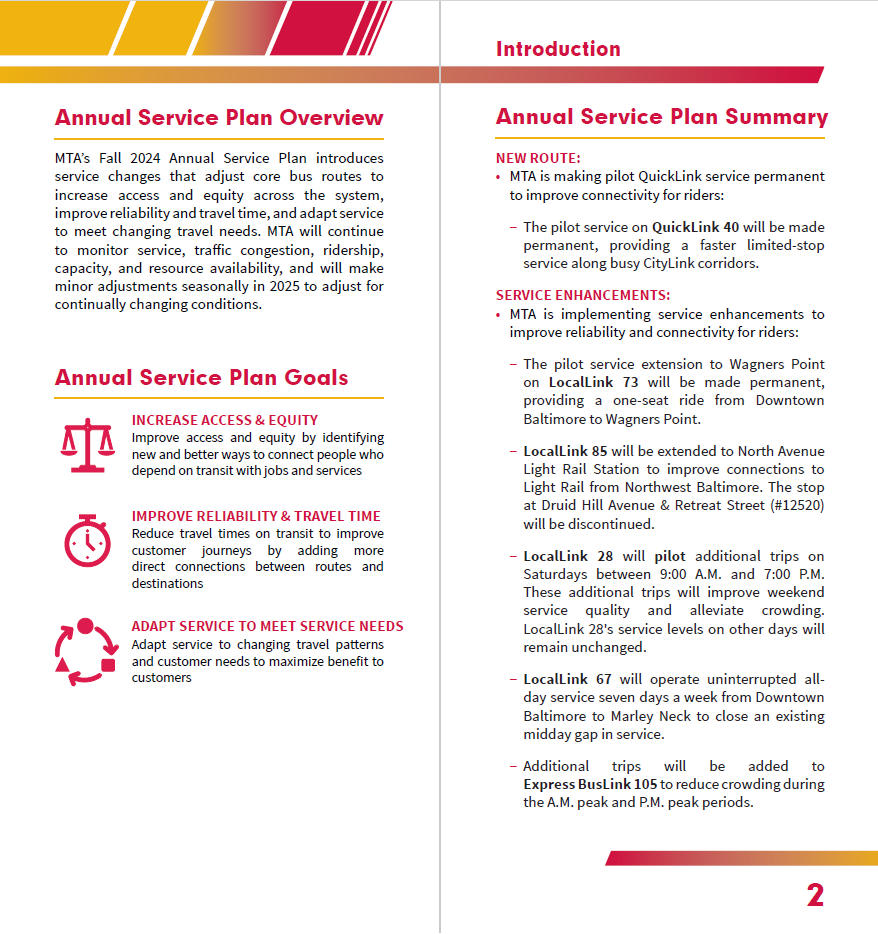
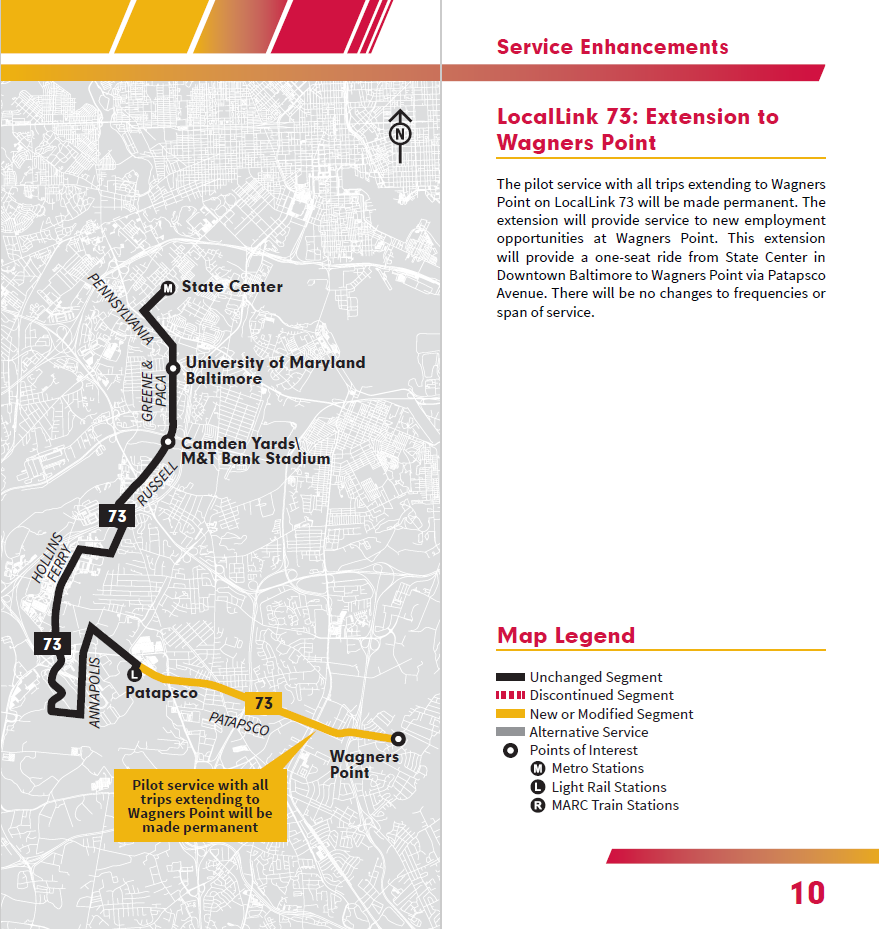
Annual service plan development. Since 2019, we have supported MTA in producing its Annual Service Plan, including performance evaluations, stakeholder and public feedback assessments, recommended service changes, and engagement support.
GTFS creation. Our team developed an in-house tool to generate a General Transit Feed Spec (GTFS) for each version of the BaltimoreLink redesign plan to be used in a side-by-side trip planner for public education. Since implementing BaltimoreLink, Foursquare ITP developed GTFS QA/QC guidance for MTA and trained staff to update the GTFS with each service change.
GTFS creation and QA/QC tools. Our team built an in‑house tool to generate general transit feed specification (GTFS) files for each BaltimoreLink service change and developed MTA’s GTFS QA/QC guidance. We also created a web‑based application that lets staff upload feeds and instantly view maps, charts, and quality checks for schedule and spatial accuracy.
Bus stop design guide. Foursquare ITP produced the BaltimoreLink Bus Stop Design Guide, providing best practices for planning and designing stops across varied environments.
Title VI equity analysis and training. We conducted Title VI analyses for proposed service changes to ensure they did not impose disparate impacts or disproportionate burdens on minority or low‑income riders. We also delivered in‑person training for MTA staff on federal Title VI requirements and MTA’s internal processes.
Staff training and capacity building. To support long‑term agency improvement, we developed and led trainings on service planning, market analysis, scheduling basics, route development, and Title VI compliance, strengthening internal staff expertise.
Solutions and Outcomes
- Developed an annual service plan in Fall of every year since 2019.
- Designed an in-house tool to generate a GTFS feed and trained MTA staff on how to update it with every service change.
- Designed an in-house tool to generate a GTFS feed and trained MTA staff on how to update it with every service change.
- Developed in-person training on Title VI components from FTA and MTA.
- Created performance measuring dashboards are route report cards for ongoing monitoring.
- Developed a service planning guidelines document and a Bus Stop Design Guide for staff.