Montgomery County’s Non-Auto Driver Mode Share Goals call for reducing drive-alone commuting through robust transportation demand management (TDM) outreach to employers, commuters, and residents countywide, including in Germantown, Glenmont, and Wheaton. The County needed to maintain its existing TDM partnerships while expanding engagement with employers and multi-unit residential (MUR) property managers in those core areas, where awareness and participation had historically been more limited, and needed ongoing support for annual County Code reporting and commuter survey efforts to track progress toward its goals.
Foursquare ITP led countywide TDM outreach to employers, commuters, and residents to increase awareness of TDM, including support for employers to comply with County Code requirements to submit annual TDM plans. Our team coordinated closely with MCDOT staff on the TDM Plan reporting system to give employers clear, step-by-step compliance guidance. We conducted a comprehensive audit of the employer database to improve data integrity and expand contacts in newly targeted areas, creating a stronger foundation for outreach. Through targeted communications, we promoted available TDM services, resources, and educational materials and encouraged employers to participate in complimentary one-on-one consultations. These consultations provided tailored support to help employers meet County requirements and develop or enhance commuter benefit programs that encourage sustainable transportation choices and contribute to the County’s Non-Auto Driver Mode Share goals.
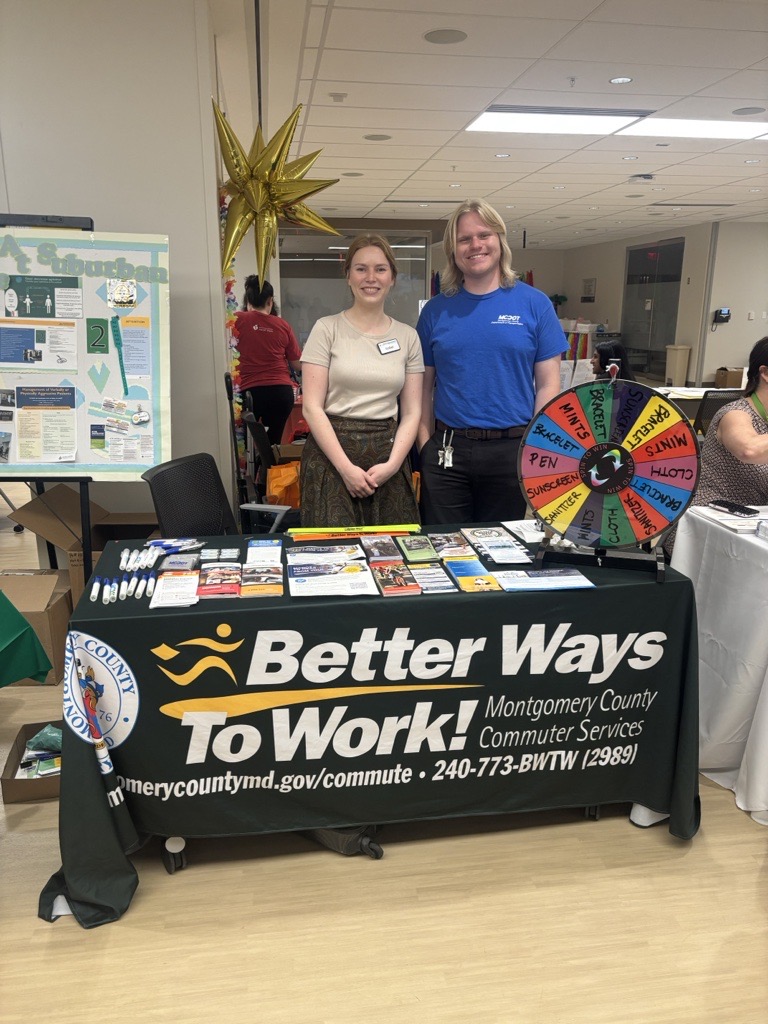
These efforts engaged 21 new employers using the Metropolitan Washington Council of Governments’ (COG) Commuter Connections participation levels, and supported 14 employers in submitting TDM plans, including two in Wheaton/Glenmont and 12 in countywide non-transportation management district (TMD) areas with no prior submissions. The team conducted 157 meetings with employers and MUR property managers, held 21 Commuter Information Days reaching 1,098 commuters and residents, and connected with 1,133 residents through 12 community events, expanding the program’s reach across the county and supporting its evolving law and survey requirements.

Solutions and Outcomes
- Expanded targeted employer and MUR outreach into underserved areas.
- Delivered travel training to increase sustainable transportation use and awareness.
- Developed an engagement strategy and workflow to increase awareness, engagement, and participation.
- Supported employer TDM plan compliance through tailored technical assistance.
- Delivered TDM education and resources to employers and MURs countywide.