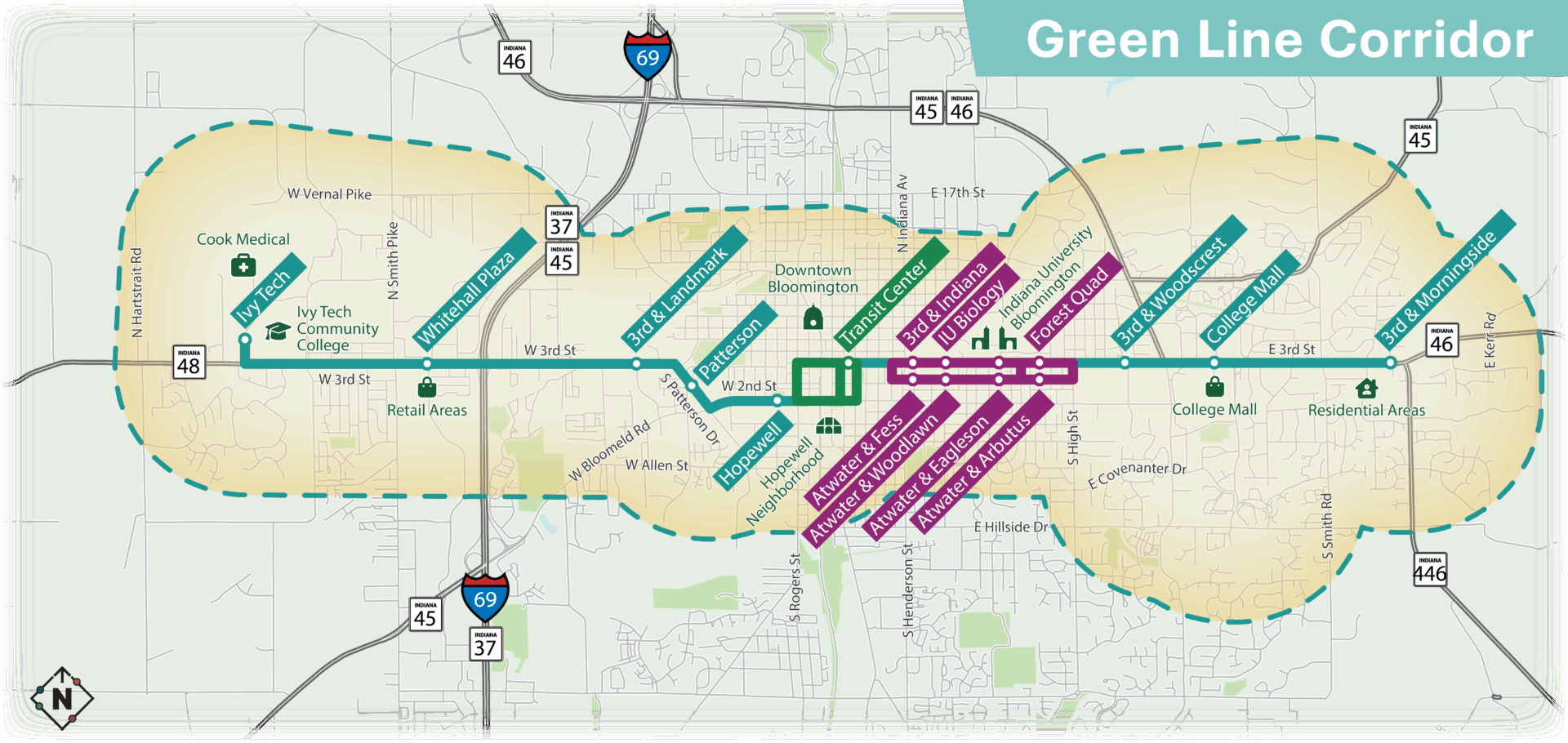
Foursquare ITP led this feasibility study to explore how to best integrate high-frequency service into Bloomington’s existing bus network, considering standard fixed-route service, bus rapid transit (BRT), or partial BRT elements to enhance the region. In response to a city council initiative to use new local income tax funding for boosting transit ridership, Bloomington Public Transportation Corporation (BPTC) sought to study a high-frequency east-west fixed-route service. The goal was to enhance transit accessibility, increase fixed-route ridership, and complement recent mobility efforts, including Bloomington Transit (BT) access, ride-hailing vouchers, and microtransit services.
Foursquare ITP evaluated service performance trends and regional travel patterns to recommend corridor service levels and bus priority strategies. Recommendations emphasize how the corridor can enhance citywide transit options while focusing on the needs of underserved communities. Public and stakeholder input at key decision points helped shape practical and equitable service recommendations.
We provided BPTC with a feasibility study that outlined a clear strategy for implementing high-frequency transit service, including guidance on intermediate bus priority improvements and a long-term vision for integrating full BRT into Bloomington’s system. This study positioned BPTC to leverage funding opportunities, enhance equity and ridership outcomes, and pursue a successful Capital Investment Grant (CIG) application. With the proposed Green Line, over 30,000 residents would have access to frequent transit during peak periods, a 30 percent increase for low-income households.

Solutions and Outcomes
- Conducted a robust transit market analysis, evaluating the feasibility of high-frequency service with BRT elements.
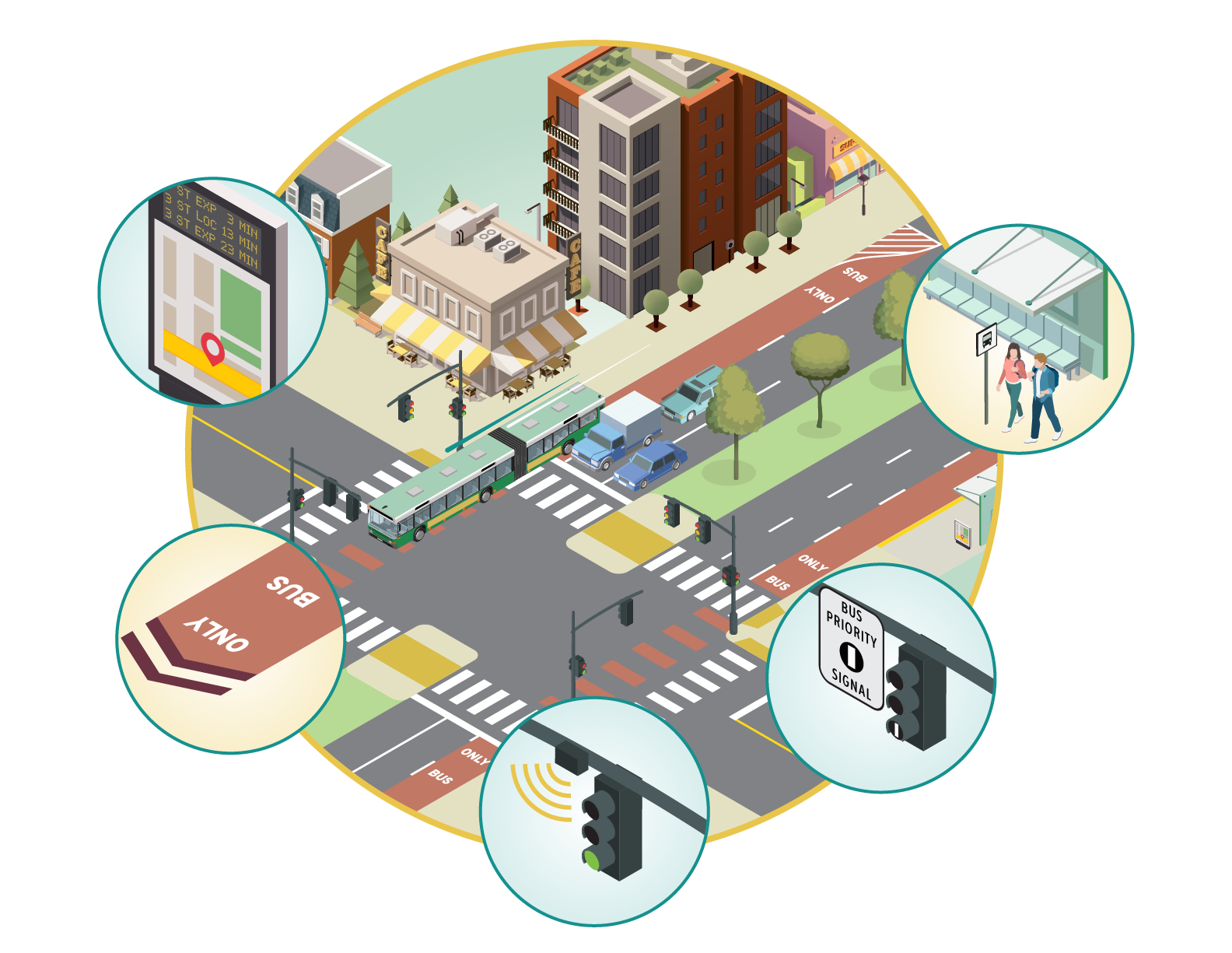
- Developed initial design concepts for enhanced stations and curb- or median-aligned bus lanes along the corridor.
- Designed alternatives for corridor service, including a new microtransit zone and adjustments to existing local routes.
- Delivered a phased implementation approach with actionable steps, funding strategies, and a roadmap for a future CIG application.